The first time is never what you think it will be
You bought the lemon vibrator. You cleared your schedule. You took a breath. And then nothing happened. Or everything happened at once. Or it felt weird in a way you didn't expect. Here's what I want you to know before you panic: this is completely normal.
When you're starting to explore solo pleasure for the first time (or returning to it after years away), a lemon clitoral vibrator doesn't feel like it does in the fantasy version in your head. The sensation is different. Your mind does different things. Your body responds differently. And almost all of that difference is not a problem. It's just information.
Why it might feel like nothing at all
This is the most common concern I hear. You turn on the lemon vibrator. You wait. You feel... underwhelmed. Maybe a gentle vibration. Maybe your brain's just narrating the whole thing instead of letting yourself feel it.
Three things are happening at once.
First, your clitoris is probably not where you think it is, or you're not quite angling the lemon suction correctly. The clitoral glans is a tiny target. Air-suction lemon vibrators work best when the suction cup creates a seal, which takes trial and error. You're not broken if this takes a few attempts.
Second, your nervous system is in sympathetic overdrive. You're hyper-aware that you're doing this intentionally, in your own space, on purpose. That awareness can block sensation faster than anything else. Your brain is running surveillance instead of surrendering to the experience. This sounds like a mental thing, but it lives in your body as numbness or flatness.
Third, you might genuinely need more time to warm up than you realized. Arousal doesn't happen on a schedule. It needs mental space, physical relaxation, and often more time than a quick solo session allows. If you're expecting sensation within 30 seconds of pressing a button, you're working against your own physiology.
The fix: move the lemon vibrator around slightly to find the sweet spot. Take three minutes just breathing before you start. Read something that genuinely turns you on first. Let your body catch up to your intention.
Why it might feel intensely overwhelming
The opposite problem is equally common. You turn on the lemon vibrator and it feels so strong, so immediate, so much that you want to stop almost right away.
This happens for two reasons. One, the suction sensation is genuinely different from anything most people have experienced. It's not the buzzy vibration of a traditional vibrator. It's more concentrated, more focused, more... pulling. That newness can feel too intense, even at low settings.
Two, you might not be used to directing pleasure this directly at yourself. There's no filter of a partner, no shared experience, no performance element softening the intensity. It's just you and the sensation, unmediated. For some people, that directness feels exposing in a way that reads as overwhelm.
The fix: start at the lowest pattern on the lemon clitoral vibrator (usually pattern 1). Many people think they need intensity to feel something. You don't. The gentlest patterns often reveal more sensation than jumping straight to power mode. Give yourself permission to use the vibrator for two minutes, stop, and try again later. This isn't a test you're passing or failing.

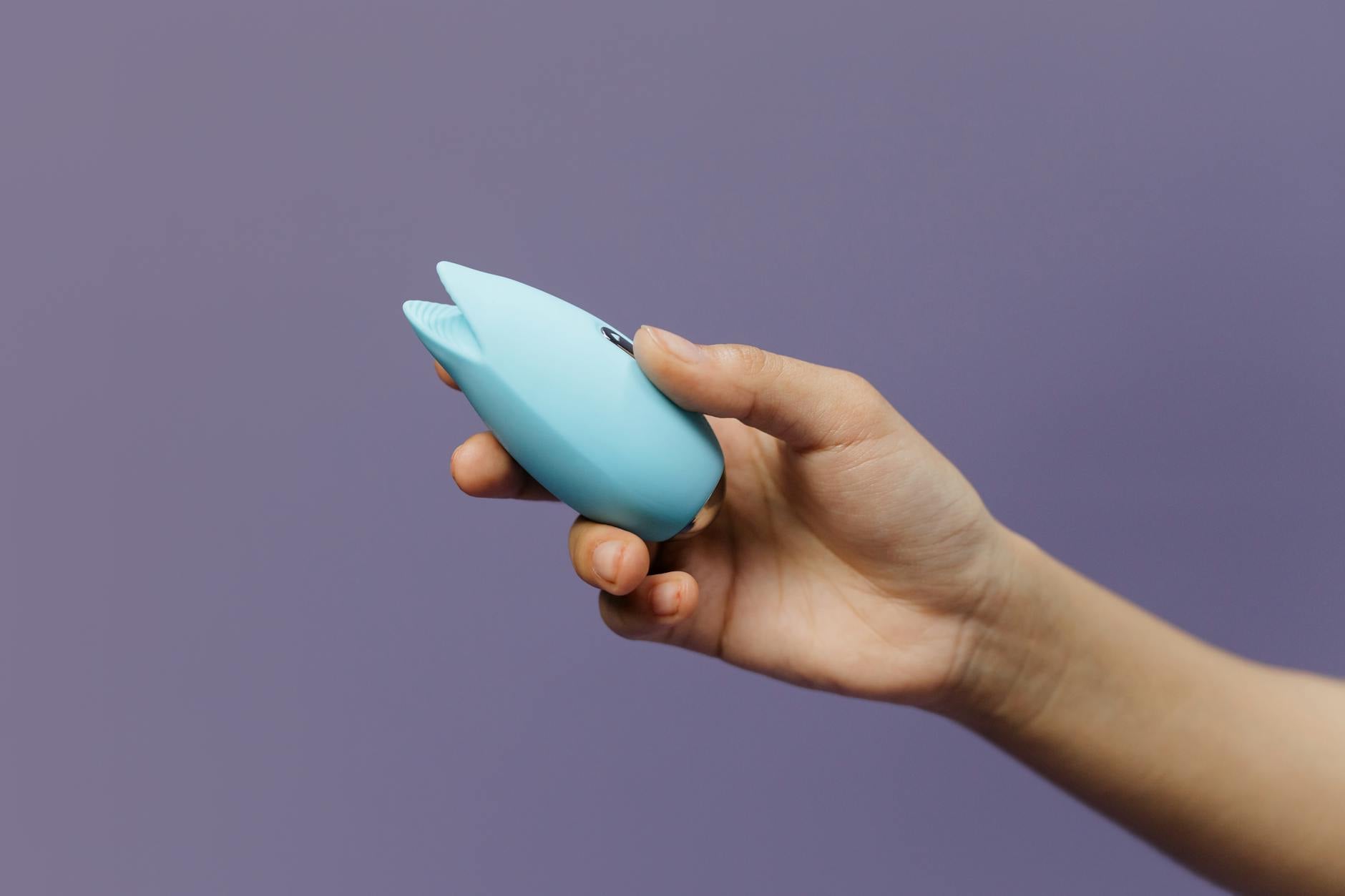
Photo by FounderTips on Pexels
Why your mind might be louder than the sensation
One of the strangest things about starting solo play is how loud your own thoughts become. You're supposed to be enjoying this. Is it working? Am I doing it right? How long should this take? What if someone hears? Why don't I feel more? Am I broken?
Your partner is not there to distract you. The rhythm is entirely your control. And that means your brain has space to run a continuous commentary instead of being pulled into the experience.
This is not unusual. It's actually very common in people who are newly exploring their own pleasure. You're learning to inhabit your body without the presence of another person anchoring you to sensation rather than thought. That's a skill, and it takes practice.
The way through: accept that your brain is going to be noisy the first few times. You're not fighting it. You're just noticing it. "My brain is doing its thing" is different from "something is wrong." Use the lemon vibrator while listening to music or a podcast that doesn't require active engagement. Let your brain have something low-stakes to do while your body learns to feel. This sounds counterintuitive, but for some people it's the only way past the surveillance.
What the different patterns actually mean
Lemon vibrators (and the lemon clitoral vibrator specifically) usually have 5 to 8 different patterns. Most people jump straight to pattern 5 or 6 because more feels like it should be better.
It usually isn't.
Patterns 1 to 3 are often gentle pulsing. They build sensation slowly. They're especially useful when you're new to solo play because they don't overwhelm. Patterns 4 to 6 are where most consistent vibration lives. This is where you'll probably want to stay most of the time. Patterns 7 and beyond are often wild escalations. They feel good for maybe 90 seconds and then your tissue adjusts and they stop working.
Start with pattern 1. Spend 30 seconds there. Move to pattern 2. The difference between adjacent patterns is smaller than you think. You're not chasing intensity. You're chasing the pattern that keeps you curious, not numb and not overwhelmed. That sweet spot is usually in the middle, not at the edges.
The role your emotional state actually plays
I need to separate two conversations here. One is mechanical: is your body responding to the physical sensation? The other is emotional: are you mentally present and comfortable exploring your own pleasure?
Both matter. And they're not the same thing.
You can be touching yourself with the best lemon clitoral vibrator on the market and still feel disconnected if you're stressed about work, grieving something, fighting with a partner, or just generally running on empty. That's not a device problem. That's a nervous system that's too activated to relax into pleasure.
Likewise, you can be emotionally ready and the physical sensation still feels strange or wrong because you're new to it or your body is having a day.
The honest version: if you've been raised to think of solo pleasure as something to rush through, hide, or feel ashamed about, your body will know. You can intellectually understand that exploring your own pleasure is healthy. But your nervous system might still be sending "danger" signals. That shows up as numbness, as feeling distant from your body, as an inability to relax. That's not a lemon vibrator problem. That's a worthiness problem, and it usually dissolves with time and repeated permission.
Why timing and environment matter more than you think
You don't need candles and rose petals. You do need a basic sense of safety and uninterrupted time.
If you're worried about being walked in on, your body won't relax. If you have 8 minutes before someone gets home, your nervous system is partially running a clock. If you're stressed about laundry or bills, part of your brain is still at work.
None of this is about being prudish or uptight. It's about how arousal actually works. Your body needs to believe it's safe and that you have time. Those aren't preferences. They're requirements.
The practical version: lock the door. Mute your phone. Give yourself at least 30 minutes (15 minimum if that's all you have, but it's not ideal). If you have a partner, tell them you're taking some time and you don't want to be interrupted. Most partners respect this. Many actually find it sexy.
Second visit and beyond, you might need less setup. But the first few times, invest in the conditions. Your pleasure matters enough to protect it.
What happens on the second try
Almost everyone reports that the second or third time feels noticeably different from the first. You know what the sensation feels like now. Your body isn't as shocked. Your mind settles faster. The experience becomes less "am I doing this right" and more "oh, okay, I remember this."
This matters because if your first time felt mediocre or overwhelming, you now have permission to write that off as a learning curve. You're not broken. You're just new. And new things feel awkward before they feel good. Lemon vibrators are no exception. The device design (especially the air-suction action on a lemon clitoral vibrator) takes your body a session or two to understand.
Give yourself at least three attempts before deciding this isn't for you. Most people find they settle into a pattern they enjoy by visit two. And many discover that pattern 2 or 3 on the lemon sucker works beautifully, rather than the intensity they were chasing initially.
When to reach out for actual support
If you're experiencing sharp pain, heavy bleeding, or a sensation of numbness that doesn't resolve in subsequent sessions, talk to a doctor. These are rare, but they're real, and they're not something to push through.
If you're struggling with shame, guilt, or intrusive thoughts about solo pleasure itself (as opposed to the mechanics of using a device), it might be worth talking to a therapist who specializes in sexuality. Those feelings often have roots that run deeper than the device itself, and they're worth exploring.
If you've tried multiple times and the experience still feels totally foreign or distressing, that's also valid. Solo play isn't mandatory. But it might be worth understanding whether it's the device, the context, or something about your relationship with your own body that's creating the disconnect. Those are different problems with different solutions.
The bigger picture
Your first time with a lemon vibrator is not a referendum on your sexuality or your pleasure capacity. It's just your body meeting something new. Sometimes that meets easily. Sometimes it takes a minute. Both are normal. The goal is not to have an earth-shattering orgasm on attempt one. The goal is to give yourself permission to explore and to notice what feels good without judgment.
If you're drawn to solo play, there's a reason. Your body is asking for something. That something might not show up perfectly the first time. But if you show up for it consistently, with patience and without expectations, you'll eventually understand what that something is. And most of the time, it's worth the learning curve.
People also ask
How long does it typically take to feel sensation with a lemon clitoral vibrator for the first time?
There's no universal timeline. Some people feel something immediately at pattern 1. Others need 5 to 10 minutes of warm-up and gentle exploration before sensation registers. If you're new to solo play generally, build in 15 to 20 minutes and think of the first five as "finding the angle" rather than "this should feel amazing already." Your body's responsiveness will likely increase in subsequent sessions once your nervous system realizes this is safe and unrushed.
Why does the lemon suction feel so different from regular vibrators?
Air-suction vibrators like the lem vibrator create a gentle pulling sensation rather than buzzing vibration. This targets the clitoris differently, focusing stimulation in a more concentrated area. For some people, that feels more intense or more noticeable. For others, it takes getting used to because it's not the familiar buzz they might have experienced before. Neither response is wrong. Your body is just learning a new type of signal.
Is it normal to feel nothing the first time with a lemon vibrator?
Absolutely. Numbness or flatness on the first attempt is one of the most common experiences, especially if you're new to solo exploration. Your nervous system might be in surveillance mode, you might not have found the exact angle, or your body might just need more warm-up time and arousal building. The second and third sessions almost always feel noticeably different. If you're genuinely feeling nothing after three to four attempts across different sessions, it might be worth troubleshooting the angle, trying different patterns, or checking in with whether your mental state is creating a block.
Can you use the lemon clitoral vibrator wrong and hurt yourself?
The device is designed to be pretty forgiving. You can't really damage yourself with a lem vibrator by using it incorrectly. That said, if the suction feels painful (rather than uncomfortable or intense), you're probably angling it wrong or the cup seal isn't positioned well. It should feel like gentle pulling or vibration, not pain. If pain shows up, reposition and try again. If pain persists across multiple sessions, check with a healthcare provider. And remember: pain is different from overwhelming sensation. Overwhelming is normal on first try. Pain is a sign to stop and reassess.
What if I'm exploring solo pleasure for the first time as an adult and feel ashamed?
Shame around solo pleasure is incredibly common, especially if you grew up in an environment where sexuality was framed as shameful or dangerous. That shame lives in your nervous system, not your rational brain. You can believe intellectually that solo play is healthy and still feel uncomfortable exploring it. That's not hypocrisy. That's just how conditioning works. This often eases with time, permission, and repeated experiences that feel safe and free of judgment. If the shame is intense or persistent, a sex-positive therapist can help you untangle the deeper roots. You don't have to push through shame to have a good relationship with your own pleasure.
How do you know when to stop and try again later versus push through discomfort?
Stop if: it hurts, it feels genuinely painful, or you're forcing yourself to keep going despite distress. Push through if: it feels weird or unfamiliar, if it feels intense in a way that's surprising rather than painful, or if your mind is just being noisy. The difference is roughly this: weird and unfamiliar are part of learning. Pain and distress are signals to stop. Most of the time in early exploration, you're dealing with the former. Honor that. Give yourself permission to put the device down after five minutes and try again next week. That's not failure. That's listening to your body.
Starting to explore solo pleasure is an act of self-respect and self-knowledge. When it doesn't feel like the fantasy version, that's not a failure of the device or of you. It's just the gap between imagination and embodied reality. Every time you show up for yourself anyway, you're teaching your body that your pleasure matters. That's where the real shift happens.
If you're navigating questions about pleasure, communication with partners, or rebuilding intimacy after distance, we're here. Reach out anytime at /contact.