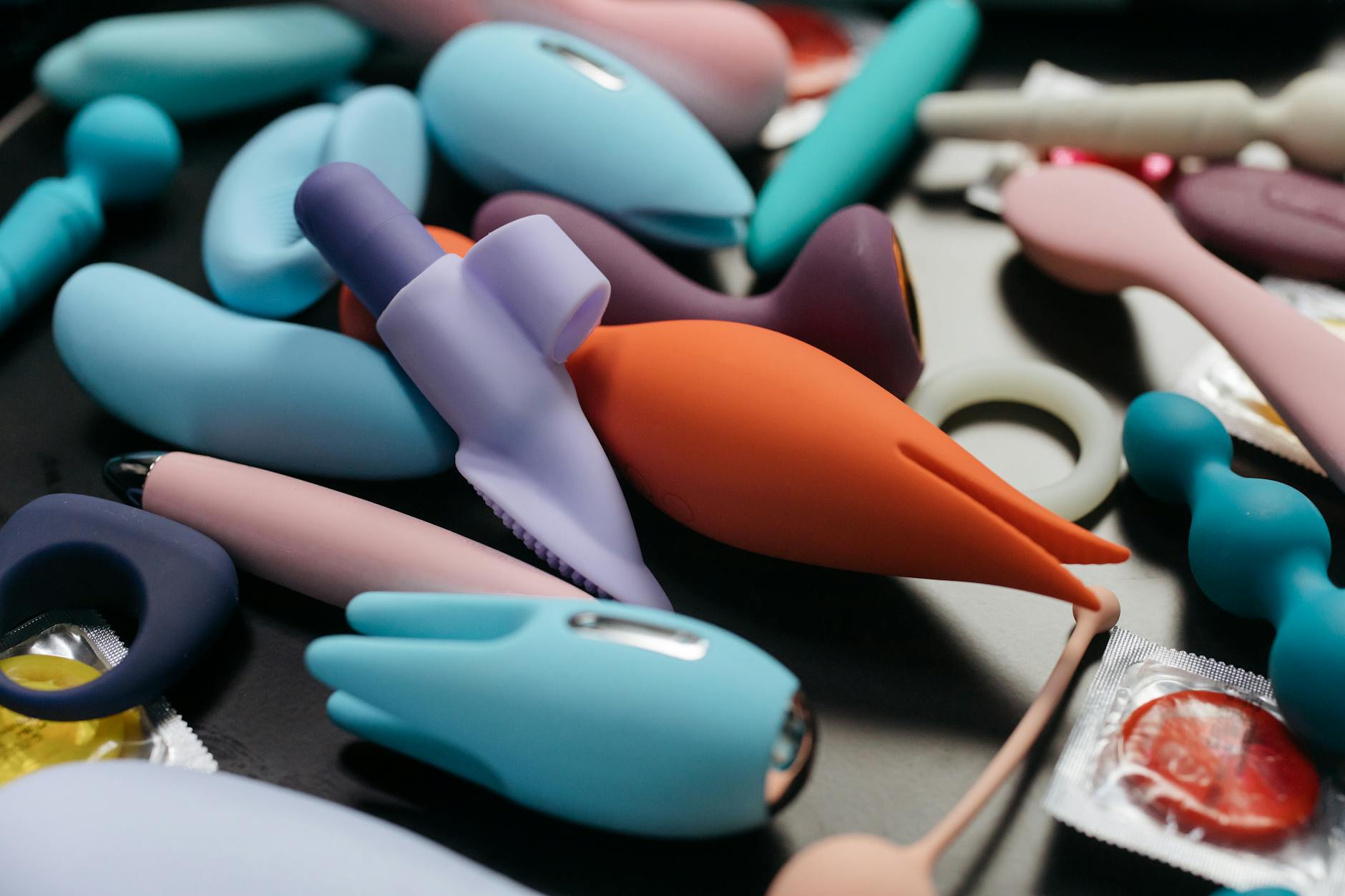
Let's be real about what's actually happening
You start a new birth control method. Within a week or two, something shifts. Your clitoral vibrator that used to feel incredible suddenly feels too intense, or not quite right. Your body takes longer to warm up. Orgasms feel muted or they've changed shape entirely. You start wondering if something's wrong with you, or if the toy is somehow different.
Neither. Birth control is changing your neurochemistry and blood flow, and that changes how lemon vibrators, clitoral vibrators, and your entire sexual response system work.
How hormonal birth control rewires your arousal
Most hormonal contraceptives—the pill, the patch, the ring, the shot—suppress your natural estrogen and testosterone cycles. Your body goes into a steady state instead of the monthly hormone rollercoaster you've known your whole life. This is why many people love hormonal birth control. It's also why pleasure sometimes feels alien for the first few months.
Here's the mechanic: testosterone isn't just a male hormone. People with vulvas produce it in the adrenal glands and ovaries, and it's a major player in desire, arousal speed, and clitoral sensitivity. Hormonal birth control typically lowers testosterone levels. That means your brain takes longer to register stimulation as arousing, your clitoris might feel less responsive to direct contact, and the whole experience of using a lem vibrator or other clitoral vibrator can feel like you're wearing mittens where you used to feel naked.
Estrogen affects lubrication and tissue thickness. Lower or more stable estrogen can mean your natural lubrication changes—sometimes decreasing, sometimes shifting in texture. Add that to any natural shift in arousal speed, and you've got a very real physical reason why your pleasure response feels off.
What actually changes with a lemon vibrator
If you've been using a lemon clitoral vibrator or any suction-style toy before starting birth control, you might notice:
Reduced sensitivity on patterns you loved. The intensity that felt perfect at pattern 3 or 4 might now feel numb or even uncomfortable. This isn't desensitization to the toy itself. It's your clitoris responding to lower testosterone levels. Some people find they need to jump to higher intensity settings. Others find that patterns that used to overwhelm them now feel manageable.
Longer warm-up time. Arousal is no longer automatic. Where you might have gotten turned on in 5 minutes, now you're looking at 15 to 25 minutes of foreplay or mental focus before your body even wants direct clitoral stimulation. This is not a problem to fix. It's a rhythm adjustment.
Lubrication changes. If you're noticing dryness you didn't have before, water-based lubricant becomes non-negotiable when using any clitoral vibrator. Not because something's broken, but because your tissue environment shifted. A quality lube doesn't just feel better. It actually protects tissue and lets you use lemon sexual toys more comfortably.
Orgasm shape-shift. Some people report their orgasms feel flatter or less intense. Others say they're less frequent but deeper. Some find they're easier to reach but require different mental focus. This usually settles within 3 to 6 months as your body acclimates to the new hormone level.
The three-month adjustment window
Birth control doesn't hit you the same way on day three as it does on day 90. Your body is literally adapting its receptor sensitivity, rebuilding tissue, and recalibrating pleasure pathways.
Month one is often the roughest. Your clitoral vibrator might feel weird, sex might feel obligatory, and you might wonder if you made a terrible choice. You didn't necessarily. Your nervous system is processing a chemical shift.
By week four, many people notice a subtle uptick. Arousal starts coming slightly easier. Sensations feel less muffled.
Around month two to three, a new normal emerges. Your body stops fighting the hormones and starts working with them. This is often when people realize their pleasure experience has shifted, but in some cases improved. Lower baseline stress, no period anxiety, clearer mental space. For some folks, this translates to better orgasms than they had before.
Practical moves that actually help
Start your warm-up ritual earlier. Don't wait until you feel turned on to touch yourself. Give your brain and body 15 to 20 minutes of foreplay, fantasy, or lower-intensity touch before you bring the lemon vibrator into play. This isn't coddling yourself. It's working with your new neurochemistry.
Experiment with lower intensity first. If you're used to jumping straight to pattern 5, try pattern 1 or 2 and spend time there. You might find you're more responsive at lower settings than you expected. Or you might find you actually need higher intensity now. The point is not to assume the toy is wrong or you are.
Use lubrication generously. Even if you didn't need it before. Water-based lube with your lemon clitoral vibrator reduces friction, protects sensitive tissue, and often improves sensation because comfort breeds responsiveness. Reapply as needed. Your tissue is adjusting.
Track your cycle if you're on a combined pill. Some birth control formulations have a placebo week where hormones drop slightly. You might notice arousal spikes then, or sensitivity shifts. Knowing when those dips happen helps you plan pleasure around your body instead of fighting it.
Give it three months before deciding it's not working. Your body is not being difficult. It's adapting. Very few people feel the same level of pleasure on day one of hormonal birth control as they do on day 90. Patience compounds.
When to talk to your provider
If after three months your desire is completely absent—not just different, but gone—that's worth flagging to your doctor. Some birth control formulations genuinely don't work for some bodies. Switching to a different pill, trying a non-hormonal IUD, or adding a testosterone boost are all valid options.
If you're experiencing pain during sex or with toys that didn't hurt before, that's also a conversation. Low-dose hormonal birth control occasionally causes vulvovaginal atrophy in susceptible people, which needs specific treatment.
If lubrication changes are severe, a topical estrogen cream is sometimes prescribed even while on hormonal contraception. These are not failures. They're adjustments.
The wider picture
Here's what I wish someone had told me: birth control changes your baseline. It doesn't erase your capacity for pleasure. It reorganizes it. For plenty of people, starting hormonal contraception and then understanding how to work with it leads to better orgasms than they had before, because the sex becomes intentional instead of reactive.
Your lemon vibrator didn't break. Your clitoral vibrator isn't the problem. Your body is doing exactly what chemistry says it should do. The win is figuring out how to make that work for you.
FAQ: Birth Control and Vibrators
Can birth control permanently change my sensitivity to clitoral vibrators?
No. Your sensitivity shifts while you're on the medication, but it's not permanent. If you stop your birth control, your testosterone and estrogen levels return to their natural cycle, and your responsiveness to lemon vibrators or other clitoral vibrators typically rebounds. That said, some people love the steadier baseline that birth control gives them and choose to stay on it for that reason alone.
Why does my partner's touch feel the same but my lemon clitoral vibrator feels totally different?
Your partner's touch involves temperature, texture, pressure variation, and emotional response. A vibrator is singular stimulation. Lower testosterone and slower arousal specifically affect how your clitoris responds to focused vibration. Partner touch has more variables, so the shift often feels less noticeable. That said, if you're also noticing less arousal to partner touch, that's the birth control hormones, not relationship drift.
Should I switch vibrators after starting birth control?
Not necessarily. But you might want to experiment. If a suction vibrator suddenly feels uncomfortably intense, a wand vibrator or lower-intensity clitoral vibrator might feel better during this adjustment window. Some people find they prefer a different toy altogether once their body has adapted. Give yourself permission to explore, rather than assuming you made a bad purchase.
Does every type of birth control affect pleasure the same way?
No. Combined hormonal birth control (pill, patch, ring) typically lowers testosterone more noticeably than progestin-only methods like the mini pill or hormonal IUD. Non-hormonal IUDs don't affect your hormone levels at all, though some people report pleasure changes from IUD insertion itself. If a particular birth control is tanking your pleasure, you have options to discuss with your provider.
How long until my lemon vibrator feels normal again?
Most people report a shift back to baseline responsiveness within 3 to 6 months. Some find their new normal is actually better because the stress relief from reliable contraception makes pleasure more accessible. A few folks find the shift never fully reverses and choose a different birth control method. All of those outcomes are valid.
Is it okay to use lube every time if I'm on birth control?
Completely. Using lubricant isn't a sign that something's wrong. It's smart sexual health. Water-based lube with your clitoral vibrator or lemon sexual toys protects tissue, improves sensation through reduced friction, and often makes orgasms easier to reach. Use it every time if that's what feels good.