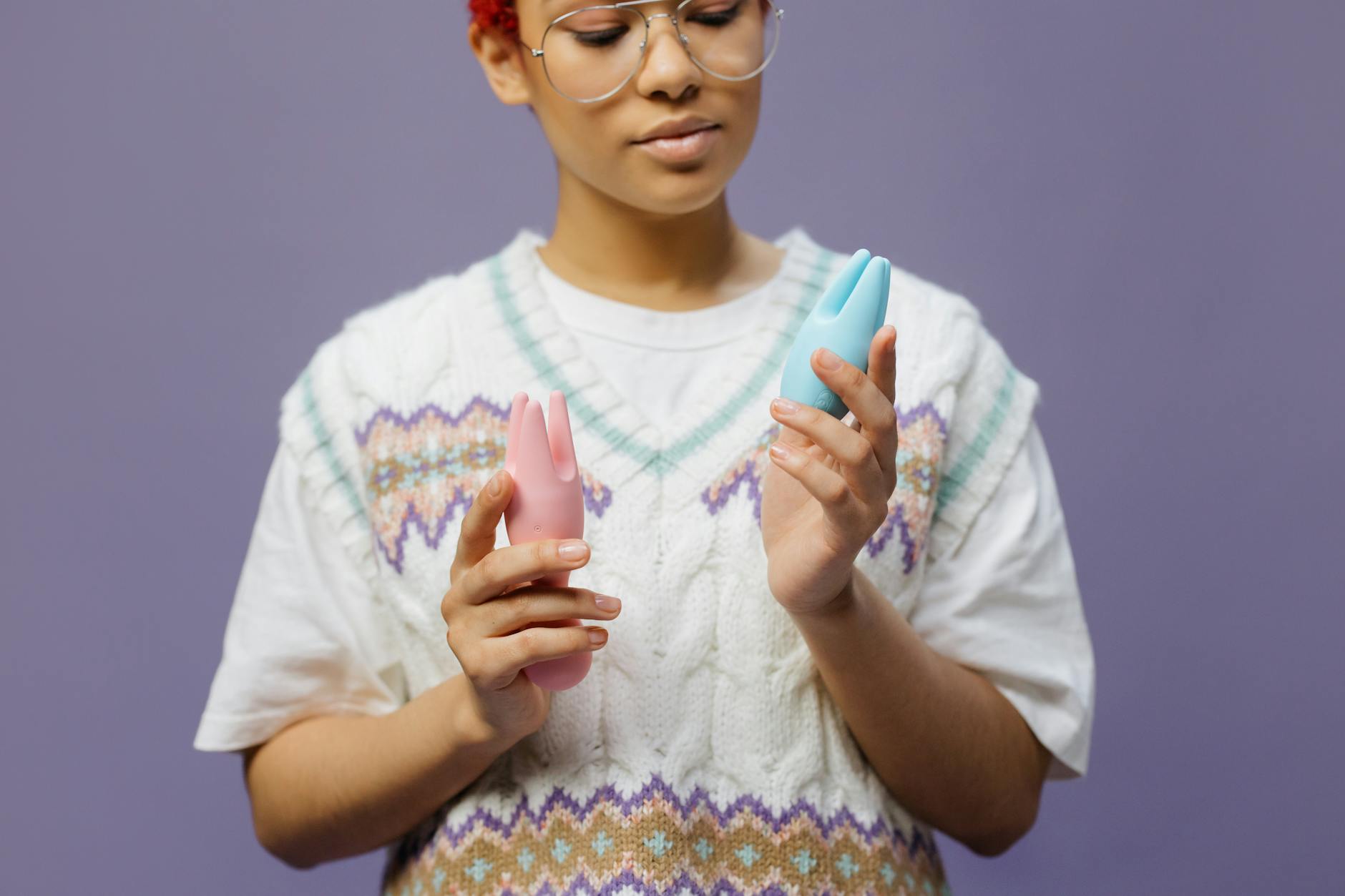
Let's name what's really happening
You turn on your lemon vibrator. Nothing. You wait. Still nothing. You try a different pattern. Nope. The device works fine on your partner or in the shower, but right now, in this moment, it feels like you're holding a fancy toothbrush against a piece of driftwood.
This isn't a product problem. This is anxiety speaking.
Nervousness doesn't just make pleasure harder to access. It physically changes how your nervous system processes sensation. The same lemon clitoral vibrator that felt incredible last week now feels muted, distant, almost fake. And the more you notice that it's not working, the worse it gets.
How your nervous system hijacks arousal
Here's the neuroscience part, simplified. Your brain has two main operating modes: the parasympathetic nervous system (rest, digest, get turned on) and the sympathetic nervous system (fight, flight, freeze). When you're anxious, you're stuck in sympathetic mode. Your body is literally preparing to run away from a tiger.
When that happens, several things shut down at once.
First, blood flow to your genitals gets redirected. Your body prioritizes survival resources over pleasure resources. Sensation dulls because there's less engorgement, less swelling, less sensitivity. Your clitoris needs blood flow to wake up. Anxiety drains that pool.
Second, your brain's pleasure centers go quiet. The parts of your prefrontal cortex that process reward literally reduce their activity. You're not broken. You're not less capable of pleasure. Your nervous system just decided pleasure is not the priority right now.
Third, and this is the tricky part, you become hyperaware of your own body instead of just feeling it. You're monitoring yourself. Is it working yet. Can I orgasm. What if I can't. That internal narration is the opposite of the focus needed for a lemon vibrator or any stimulation to work. You're watching yourself perform pleasure instead of experiencing it.
Why this happens more than you think
Anxiety around pleasure has specific sources, and they're rarely about the toy itself. Common triggers include.
Performance pressure. If you're with a partner, especially early in a relationship, there's often an invisible expectation about what should happen and how long it should take. Lemon clitoral vibrators are powerful, which can create weird pressure about "should I be coming right now" instead of enjoying the buildup. That pressure tanks arousal immediately.
Intimacy anxiety. Sometimes the closeness of another person, even someone you trust, triggers your nervous system. This is normal. It's not about them. It's about the vulnerability of being fully present while someone watches you experience pleasure. Your sympathetic nervous system fires up as a protection mechanism.
Past experiences. If you have a history of sexual discomfort, pain, or unwanted touch, your nervous system learns to stay guarded during sexual moments. Your lemon vibrator might even feel triggering simply because it's sexual stimulation, and your body goes into protective mode without you even being aware of it.
Life stress. A work deadline, an argument you haven't resolved, financial worry, grief. Your whole nervous system is already in a low-level fight response. Adding sexual stimulation to that doesn't resolve the fight response. It just adds more things you're not present for.
Perfectionism about the experience itself. Some people approach pleasure like a project to optimize. Every session needs to end a certain way. The vibrator needs to work a certain way. This kills everything. Pleasure requires a kind of surrender that direct goal-seeking actively prevents.
What actually helps bring sensation back
The solution is not to keep using your lemon vibrator harder or longer. That makes it worse. Instead, reset your nervous system first. Here's what I recommend to clients.
Start before the vibrator. Spend 10-15 minutes doing something that genuinely settles your body. A warm shower. A walk. Breathing work (4 seconds in, 6 seconds out works well). Stretching. The goal is not to "relax" in some forced way. The goal is to signal to your nervous system that the tiger is not coming. You're actually safe.
Remove the endpoint. Tell yourself right now that you don't need to come. This session doesn't have a goal. You're just exploring sensation with no outcome required. Honestly, this one shift alone fixes it for a lot of people. The moment you remove the performance requirement, arousal shows up. Because arousal hates being watched and judged, even by yourself.
Start without the toy. Before you turn on your lemon clitoral vibrator, spend time touching yourself in ways that feel good but aren't overtly sexual. Your arm, your neck, your inner thigh. Get your body used to being touched without the pressure of "this is the stimulation that should make me aroused." Then introduce the vibrator when your nervous system is already a little warmer.
Use the vibrator as exploration, not solution. Instead of expecting the lemon vibrator to make you feel something, treat it like a question you're asking your body. Where does this feel interesting. What pattern creates a ripple rather than nothing. What happens if you move it slightly. This shifts you from "is it working" to "what is this doing," which keeps your brain in a place of curiosity instead of judgment.
Give it time. Arousal builds in layers when you're coming out of anxiety. You might not feel much in the first five minutes. That doesn't mean it's not happening. It means your nervous system is still coming down from fight mode. Your lemon vibrator might feel better at minute seven or minute twelve than it did at minute two. Stay patient with the process instead of abandoning it.
If you're with a partner, consider being honest about this. "I'm in my head a bit tonight" is a real sentence. It lets your partner know that slowness isn't rejection. It's recalibration. Many couples find that naming the anxiety out loud actually dissolves part of it because you stop performing.
When anxiety is deeper than the moment
If you're noticing that you're regularly nervous during sexual moments, even alone, it might be worth talking to a therapist who specializes in sexual health or somatic work. Sometimes our bodies are protecting us from something our minds haven't fully processed. A good therapist can help you understand what your nervous system is defending against.
Anxiety about pleasure isn't a personal failure. It's your nervous system doing exactly what it learned to do. The good news is that nervous systems are plastic. They can learn different responses. Your lemon vibrator will feel different when your body believes you're actually safe. And that belief builds through practice, patience, and removing the pressure to perform.
People also ask
Why do clitoral vibrators feel numb when I'm stressed?
Stress activates your sympathetic nervous system, which redirects blood flow away from your genitals and toward your muscles and heart. Your clitoris relies on engorgement for sensitivity. When blood flow decreases, sensation dulls significantly. Additionally, stress elevates cortisol, which actively suppresses arousal hormones like dopamine and testosterone. You're not less capable of pleasure. Your body is just in a protective state that sensation can't penetrate.
Does anxiety actually prevent orgasm or just make it harder?
It can do both. For some people, anxiety makes orgasm take much longer or require significantly more intense stimulation. For others, anxiety creates a ceiling where orgasm simply won't happen, no matter what. This varies person to person. The key is understanding that this isn't permanent. Once your nervous system settles, your lemon clitoral vibrator typically works the way it did before.
How long does it usually take to feel your vibrator work again after anxiety?
It depends on what triggered the anxiety and how deep it is. A situational anxiety, like nervousness during a first time with a partner, might resolve in a few sessions once you feel safer. Chronic anxiety or stress might take longer because your nervous system needs more evidence that it's actually safe. Most people find that within 2-3 weeks of practicing the techniques above, sensation returns noticeably.
Can you use a lemon vibrator to actually help with anxiety?
Not while you're actively anxious. But pleasure itself, once you access it, is genuinely calming to your nervous system. The parasympathetic activation that happens during genuine arousal and especially orgasm signals safety to your body. So the irony is that working through the anxiety to reach pleasure actually becomes anxiety medicine. But you have to get past the anxiety threshold first, which means not using the vibrator as the tool to do that.
Is this about the toy or about me?
It's about your nervous system in that moment, not about you being broken or the toy being insufficient. Hello Nancy's lemon clitoral vibrators work powerfully for millions of people. When they don't work for you, it's because your body has other priorities in that moment. That's a signal worth listening to, not fighting against.
What if I'm anxious even about being alone with my vibrator?
That anxiety often traces back to feeling like you don't deserve pleasure, or that pleasure is something you need to earn through performance or looking a certain way. Start smaller. Use your vibrator with zero intention around pleasure. Just turn it on and notice what it feels like. No agenda. No pressure to feel anything. Many people find that anxiety softens once pleasure stops feeling like a test they're being graded on.
Getting back to sensation
Your lemon vibrator isn't the problem. Your nervous system is just protecting you the best way it knows how. The path forward is not forcing arousal. It's creating the conditions where arousal can show up naturally. That means settling your nervous system first, removing performance pressure, and approaching pleasure as exploration instead of achievement.
Once you do that, you'll find that your clitoral vibrator works exactly the way it's supposed to. Because the pleasure was never missing. Your nervous system just needed permission to access it.