Let's talk about the sensation gap
You're touching yourself, or your partner is, and it feels like your body isn't quite home. The touch registers, sure, but it's muted. Distant. Like you're experiencing pleasure through a pane of glass instead of directly. It's frustrating and confusing, especially if sensation used to feel sharp and immediate.
This isn't a personal failure. It's a symptom with traceable roots.
Why numbness and muted sensation happen
Sensation fading or flattening during sex comes from a handful of predictable sources. Knowing which one applies to you changes how you approach it.
Anxiety and distraction. The brain is your largest sexual organ. When you're worried about something else, ruminating about how you look, or scanning the room for distractions, your nervous system diverts resources away from pleasure sensing. Blood flow concentrates on survival, not sensation. The body goes numb not because it's broken, but because your mind is elsewhere.
Medication side effects. SSRIs, antidepressants, blood pressure meds, and some hormonal contraceptives can dampen sensation. Some people report feeling like they're watching sex happen to someone else. This is a real neurochemical effect, not psychosomatic.
Hormonal changes. Estrogen supports nerve sensitivity in the vulva. When estrogen drops, even slightly, sensation can feel quieter. This happens during the luteal phase of the cycle, early perimenopause, or after hormonal shifts. The nerves are still firing. They're just sending quieter signals.
Chronic stress and dissociation. Long-term stress teaches your nervous system to dampen pain by also dampening pleasure. It's a protective adaptation that outlives its usefulness. Your body literally turns down the volume to protect itself.
Desensitization from overstimulation. If you've been using the same toy at the same intensity for months, your nerve endings adjust. They stop responding as strongly. This is called accommodation. It's not damage. It's adaptation.

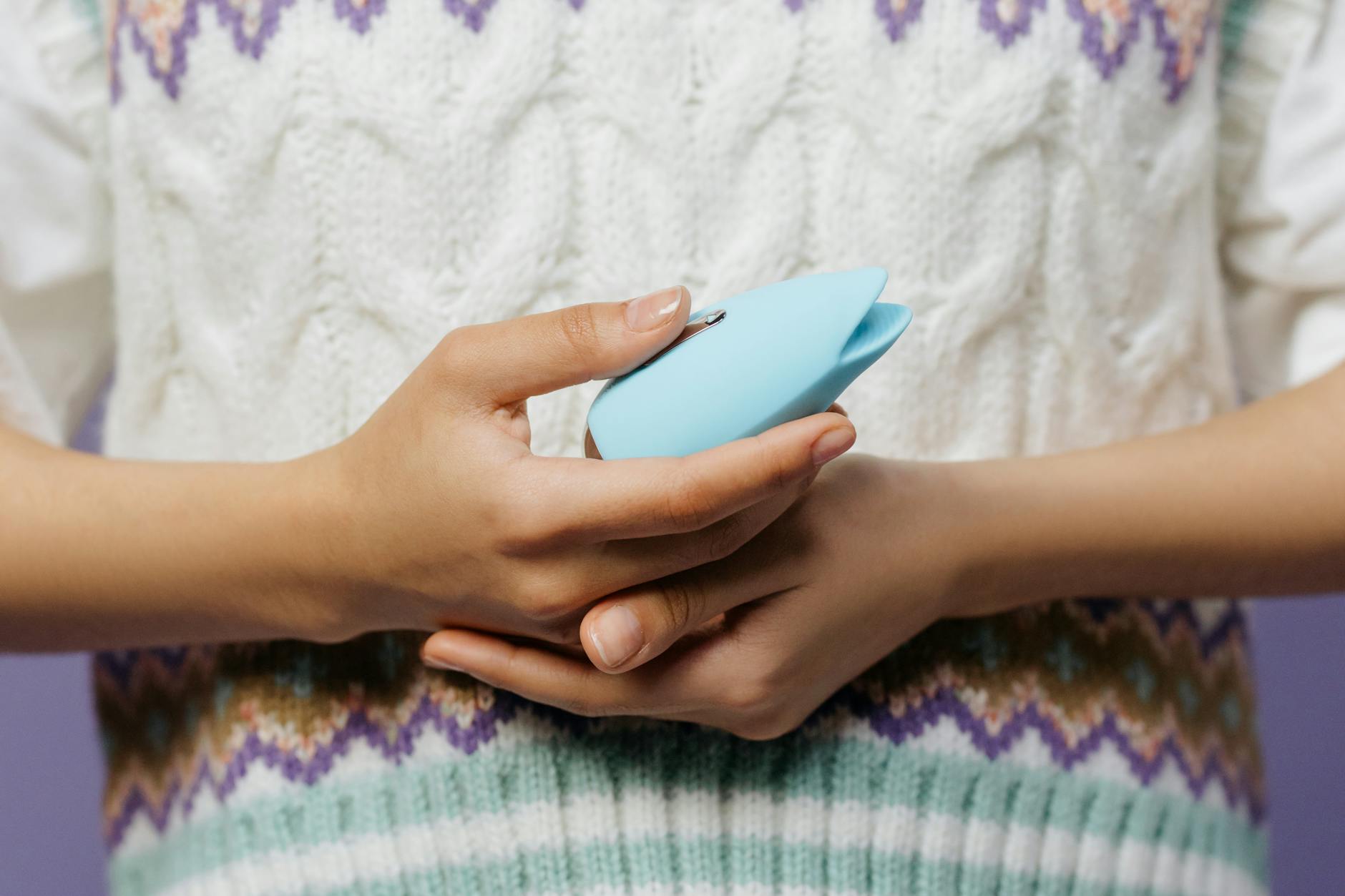
Photo by Hanna Brovko on Pexels
How clitoral vibrators rewake sensation
This is where lemon vibrators, especially the Lem, become precision tools instead of just toys.
A good clitoral vibrator doesn't just add stimulation. It breaks through accommodation by delivering a pattern your nerve endings haven't adjusted to yet. The combination of rhythm and suction (if you're using an air-suction model like the Lem) creates a signal that's distinctive enough to cut through numbness.
Here's the mechanical reason: suction stimulates the clitoral bulb, the internal erectile tissue that runs much deeper than most people realize. You're not relying only on surface touch. You're engaging a broader neurological network. That distributed stimulation often pierces through when direct touch alone doesn't.
The pacing strategy that restores sensation
Don't fight numbness by turning intensity up. That's the reflex, and it backfires.
Instead, work with what's called "sensation cycling." Start at the lowest pattern setting on your lemon vibrator. Spend 3-5 minutes there, even if it feels too subtle. You're retraining your nerve endings to recognize signal.
Then step up one level. Stay for 3-5 minutes. Then the next. You're creating a gradient of stimulation that teaches your nervous system: "Pay attention. Something new is happening."
This works because novelty breaks accommodation faster than raw intensity. Your body's attention sharpens when the stimulus shifts.
Environmental and mental reset
You can have the best lemon sexual toy in the world, but if your mind is running through your to-do list, sensation will still feel muted.
Try this before using any vibrator: 5 minutes of genuinely doing nothing. Not meditation. Not visualization. Just sitting or lying still without your phone, without a task. Let your nervous system downshift from sympathetic (fight-or-flight) to parasympathetic (rest-and-digest). Sensation lives in parasympathetic space.
Then, when you pick up your lemon clitoral vibrator, give yourself permission to spend the first 10 minutes on exploration, not performance. Touch your own body first, without the vibrator. Relearn the map. This primes your sensory cortex to recognize and amplify the sensations the vibrator will add.
Working with partners when sensation feels distant
If you're with a partner, honesty here prevents resentment later. "My sensation feels muted right now. It's not about you. We're going to use this tool to help me wake it back up."
Then, the practical part: have your partner hand you the vibrator. Let them watch how you use it. Many people find that reintroducing a lemon adult toy into partnered sex actually deepens intimacy because it removes the pressure of faking sensation or performing arousal.
Your partner can also help by slowing down their pace. Sensation sharpens when stimulation is deliberately timed, not rushed. If your partner is used to a faster rhythm, ask them to halve their speed. Counter-intuitive, but it works.
When sensation returns (and why it takes time)
For most people, reawakening sensation takes 2-4 weeks of regular, patient practice. Not every single day, but 3-4 times per week, for 15-20 minutes.
You'll know it's working when you notice a moment where the vibration actually feels good instead of just technically present. That shift is neuroplasticity in real time. Your nervous system is remapping sensation pathways.
Don't expect to go from numb to intensely aroused overnight. The progress is small and then sudden. You'll go along feeling almost nothing, and then one session, your body wakes up. That's normal.
When to rule out medical causes
If numbness is paired with other symptoms—pain during arousal, unusual discharge, significant mood shifts—talk to a doctor. Numbness during sex can sometimes signal thyroid issues, unmanaged blood sugar, nerve damage, or medication interactions that need professional attention.
If it's purely sensation flatness with no other symptoms, the tools here will usually work. But don't suffer through silence if something else is going on.
FAQ: Numbness and sensation recovery
Can using a lemon vibrator make numbness worse?
No. Using a vibrator at sensible intensity actually speeds recovery. The risk is overusing it at maximum settings, which can temporarily fatigue nerve endings further. Start low, progress slowly. Your body will tell you what it needs.
How long does it take to feel sensation return?
Most people report noticeable changes within 2-4 weeks of regular use. Some feel shifts in a few days. Patience matters more than frequency. Consistent, calm exploration beats sporadic, goal-oriented sessions.
Does medication-related numbness ever fully resolve?
Yes, often. Some medications dampen sensation more than others. If the side effect bothers you, talk to your prescriber about timing (taking it at a different time of day), switching medications, or adjusting dosage. Sensation often improves once the pharmaceutical adjustment is made. Never stop medication without medical guidance.
Can anxiety cause sensation to feel numb?
Completely. Anxiety is the most common cause of sensation flattening. Your nervous system is protecting you by dampening input. Breaking the cycle means addressing both the anxiety (therapy, breathing work, grounding techniques) and the sensation piece (the strategies in this post). They work together.
Is it normal for sensation to feel different in different parts of your cycle?
Yes. Estrogen fluctuates, and so does sensation. Many people find that the follicular phase (first half of the cycle) feels more sensitive, while the luteal phase (second half) feels more muted. Knowing this, you can adjust your approach. During lower-sensation phases, give yourself more time, lower intensity at first, and more foreplay.
If sensation doesn't improve after a month, what's next?
Check three things: Are you using the vibrator consistently (3-4 times per week)? Are you actually managing the underlying stress or anxiety? Have you ruled out medication side effects or medical issues? If all three are handled and sensation still feels flat, a conversation with a sex therapist or your doctor is the next step. Sometimes numbness signals something that needs expert eyes.
The path back to feeling
Numbness during sex is one of the most fixable intimacy challenges. It's not a personal flaw. It's a temporary mismatch between your nervous system and sensation. The right lemon vibrator, paired with patience and realistic expectations, almost always restores what feels lost.
Your body wants to feel. You're just giving it the right conditions and tools to remember how.
Ready to explore this further? We're here to help. Reach out to our team at Helonancyslems if you have specific questions about which tool might work best for your situation.