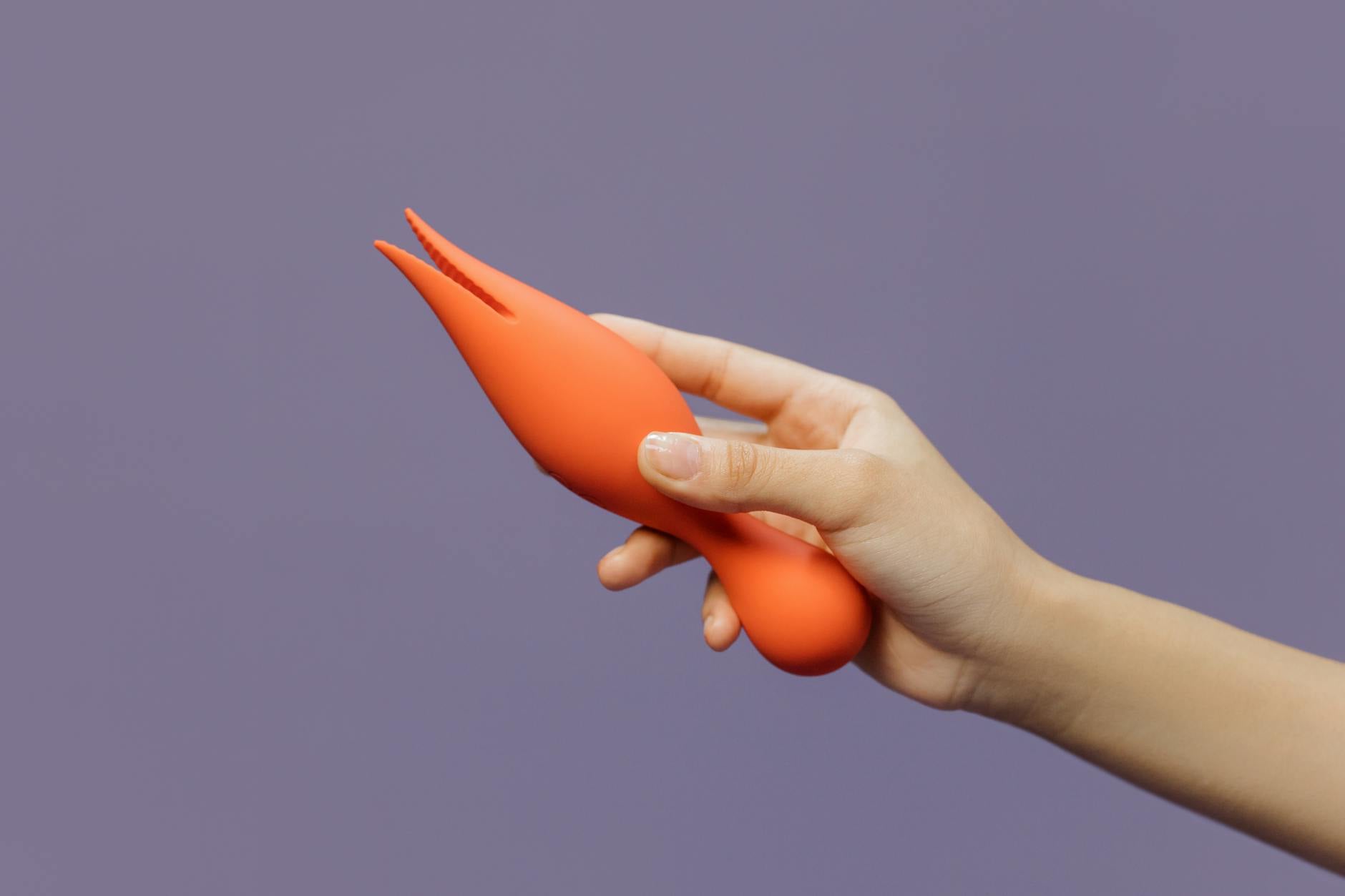
How to Use a Lemon Vibrator When Your Partner's Desire Doesn't Match Yours
One of you wants more. One of you wants less. A lemon clitoral vibrator isn't a fix for that gap, but it can help you stay connected while you figure out what you both actually need.
Mismatched desire is not a sign your relationship is broken. It's one of the most common friction points couples face, and it shows up across every demographic, every relationship structure, and every stage of life. One partner wants sex twice a week. The other is fine with twice a month. One person's libido shifted after kids, or stress, or health changes. The other's didn't. Neither person is wrong.
What's actually happening is two separate realities bumping into each other without much language for it. The higher-desire partner feels rejected. The lower-desire partner feels pressured. Both retreat. Then resentment does the work that desire used to.
Here's the thing: a toy, even a really good lemon vibrator, won't balance out desire mismatch. But it can change the shape of the problem. Instead of framing pleasure as something that happens only when both people want it at the same time, it creates space for independent pleasure that doesn't demand reciprocation.
When desire is mismatched, sex often becomes a negotiation instead of something that happens. "Can we do it tonight?" "Maybe tomorrow?" "I'm too tired." Each exchange carries weight. Each no feels like rejection, even when it isn't personal. The higher-desire partner stops asking. The lower-desire partner stops offering. Intimacy doesn't disappear immediately. It just quietly shrinks.
A lemon clitoral vibrator changes the architecture of that pattern. Suddenly there's a way to access pleasure without requiring your partner to be in the mood. You're not waiting. You're not negotiating. You're not building resentment on either side.
That alone is clarifying. It removes the pressure that was clouding everything else.
Honestly, before you bring a toy into a mismatched-desire situation, you need to name it. Not accusingly. Not as a suggestion that something is wrong with either of you. Just as fact.
Something like: "I've noticed we want sex at different frequencies, and I think that's normal, but I don't want us to drift because of it. Can we talk about what's actually going on?"
Then listen. Really listen. Is your partner exhausted? Touched out? Experiencing body dysphoria? Dealing with medication side effects? Grieving something? Resentful about something unrelated to sex? Each of these has a different answer.
If your partner is low-desire because they're depressed or medicated or dealing with an unprocessed hurt, a toy doesn't fix that. It just gives you both something to do while the real problem sits there. Get that part sorted first, ideally with a therapist who understands sexual health.
But if the mismatch is just a mismatch. If one of you naturally has a higher libido and the other doesn't, and you're both otherwise healthy and connected. Then you have options.
First: it separates pleasure from obligation. When you use a lemon clitoral vibrator on your own or have your partner use it on you without the expectation of reciprocal sex, pleasure stops being something you negotiate as a couple. It just becomes something you do. This sounds simple, but it's actually radical. It removes the pressure that was making everything harder.
Second: it can open a door to partner touch without escalation. Some lower-desire partners are happy to use a toy on their higher-desire partner. It feels intimate, it feels participatory, but it doesn't require them to be in full arousal mode. You get touch. They get to participate without performing full desire they don't feel. This works surprisingly well when both people understand what's actually happening.
Third: it gives the lower-desire partner permission to opt out without guilt. "I'm not in the mood for sex, but I want you to feel good. Use the lemon while I'm here with you." Suddenly nobody's resentful. Nobody's alone. Nobody's pretending.
Here's how to actually make this work without it feeling weird or transactional.
Start by normalizing solo pleasure. If using a lemon vibrator by yourself is still something that feels shameful or hidden, that's the real problem to solve first. Your partner knowing you have access to pleasure that doesn't depend on them is actually healthy. It's not a threat. It's not an indictment of their desire. It's just. Normal.
Then, if your partner is willing, invite them into that. Not as performance. Not as foreplay that's supposed to lead somewhere. Just as something you do together sometimes. They watch, or they use the toy on you, or they're in the room reading while you do your thing. The point is you're not hiding it or sneaking it.
If your partner is the higher-desire one, same principle. You might enjoy using the lemon vibrator while they're present without needing them to match your arousal level. That's okay. That's actually useful information.
The lemon clitoral vibrator works particularly well here because the design is straightforward. It's not complicated. It's fast. For people with lower desire, knowing they can help their partner feel good in fifteen minutes without it becoming a whole thing is actually relieving.
This is important, so I'm going to say it clearly: a toy doesn't fix the underlying mismatch.
If one of you wants emotional connection and the other doesn't, a toy won't solve that. If one of you is in a different stage of life and it's affecting desire, a toy won't address that. If there's resentment or betrayal or unresolved conflict, a toy just buys you time while the real work isn't happening.
What a lemon vibrator does is create space. It gives you breathing room. It removes pressure. That space is where actual conversations happen. That's where you can figure out if the mismatch is something you can live with, or if you need to make bigger changes.
Sometimes that space leads to reconnection. Sometimes it leads to understanding that you need different things and making peace with that. Sometimes it leads to therapy. All of those are better than resentment and withdrawal.
If the lower-desire partner is completely disengaged, a toy won't help. If the higher-desire partner is angry and looking for something to blame it on, a toy definitely won't help. If communication is so broken that you can't talk about why desire is mismatched, you need a couples therapist more than you need a lemon vibrator.
But if you're fundamentally connected and just dealing with a frequency mismatch, or if one person's desire has shifted because of life circumstances, then yes. A good clitoral vibrator and the conversation that goes with it can genuinely change how you navigate this together.
Mismatched desire doesn't have to mean disconnection. But it does require honesty. It requires naming the problem instead of pretending it's not there. It requires both people being willing to find creative solutions instead of just alternating between pressure and withdrawal.
A lemon sucker isn't a relationship fix. But it's a tool that can help you stay intimate while you figure out what you both actually need. And sometimes that's enough to get you through to the other side.
Frame it as a solution for you, not a comment on them. "I've been thinking about ways we can both feel good without as much pressure on both of us" works better than "I want to use a toy because you don't want sex enough." The first is about problem-solving. The second sounds like blame. Lead with curiosity, not complaint.
That's a belief worth exploring, but it's separate from the desire mismatch itself. Some people have hang-ups about toys for reasons unrelated to your relationship health. If that's the case, a conversation with a sex-positive therapist might help them understand that your pleasure doesn't diminish theirs. But you can't force that shift. You can only offer information and set boundaries about what you need.
No. It can remove pressure and create space, but it doesn't address what's actually causing the desire gap. If it's medical, you need a doctor. If it's psychological, you might need therapy. If it's relational, you need to talk. The toy is an accessory, not the solution.
Completely normal. Libido varies wildly based on genetics, health, stress, medication, relationship satisfaction, and about a hundred other factors. Wanting sex two or three times a week while your partner wants it once a month isn't a sign anything's wrong with either of you. It just means you're different.
There's no rule. Once a week, twice a month, once every few months. The point isn't frequency. The point is that it's happening without pressure or resentment. If using it together feels natural and connected, that's working. If it feels obligatory, it's not.
That guilt is worth unpacking, probably with help. Some of that might be internalized pressure or shame. Some might be legitimate concern that they're not meeting their partner's needs. But guilt doesn't create desire. It usually kills it. The real work is separating their own authentic desire from what they think they should want, and from what they think their partner needs them to want. That's therapy territory, not toy territory.
Mismatched desire is one of the hardest things long-term couples navigate. It's not simple. It's not fixed by communication podcasts or one conversation. But it is manageable. And sometimes a tool like a lemon clitoral vibrator, combined with honest conversation, is exactly what helps you stay connected while you both figure out what you actually need. If you're struggling with this, that's not a sign your relationship is failing. It's a sign you're ready to get more honest about what you both want.