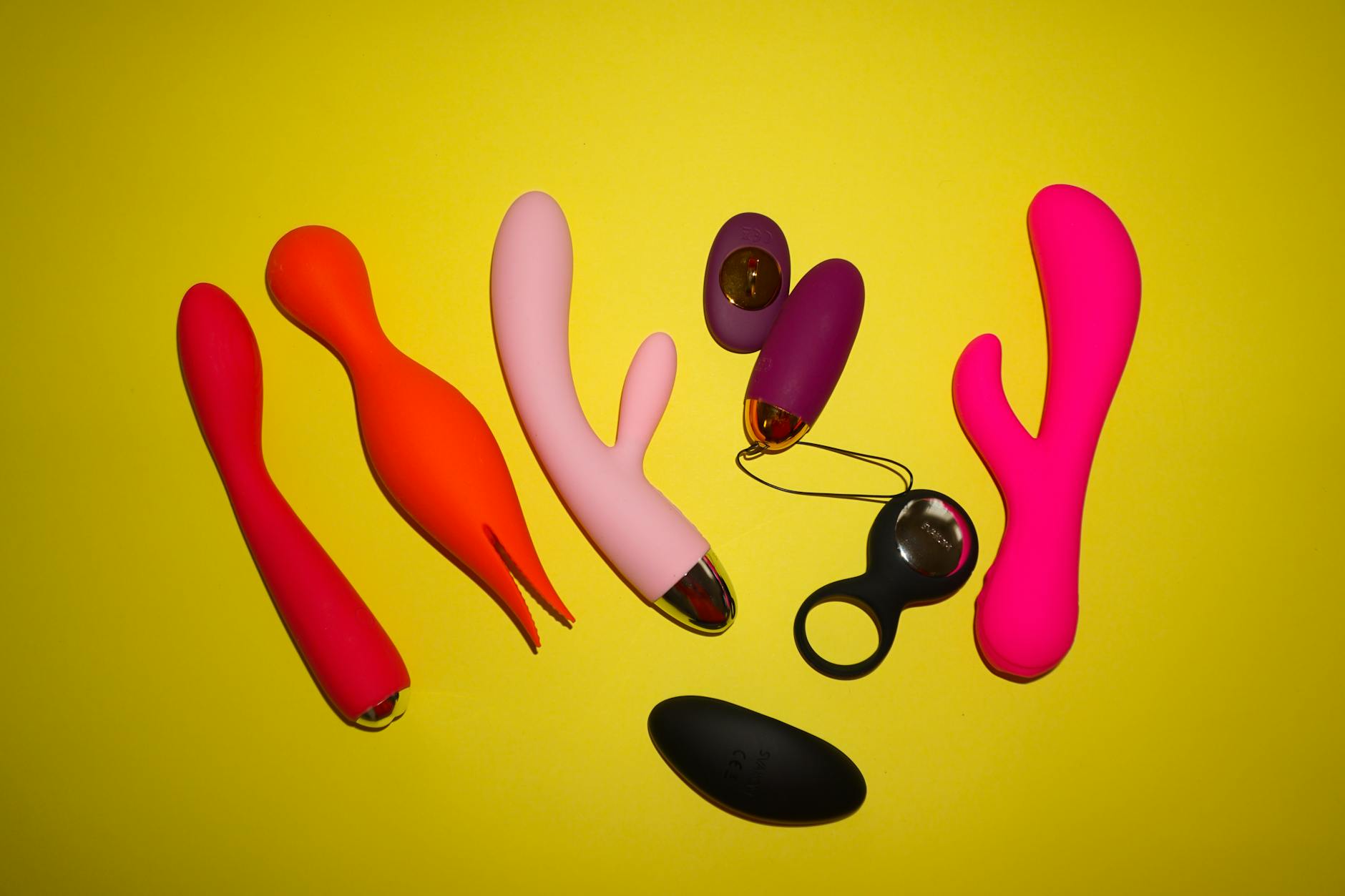
Let's talk about the body you're no longer feeling
Disconnection from your body isn't weakness or laziness. It's a survival mechanism. When life gets overwhelming, when you've endured stress or trauma, when you're running on empty, your nervous system essentially unplugs you from physical sensation. You're walking around in your body but you're not really in it. Touch feels muted. Pleasure feels impossible. Even pain sometimes disappears, which sounds good until you realize you've also lost your ability to feel joy.
I see this pattern constantly in my practice, and it rarely looks like what people expect. It's not always dramatic or tied to a single incident. Sometimes it's just the slow erosion of chronic stress, parenting burnout, or years of dissociating during sex because you didn't feel safe. The body learns to protect itself by shutting down.
What matters right now is this: reconnection is possible, and lemon vibrators are surprisingly effective at rebuilding that bridge between your mind and skin.
Why disconnection silences pleasure
Here's the neuroscience part, but I'll keep it simple. When you're dissociated, your brain has essentially dampened the volume on incoming sensory signals. Your clitoris has the same number of nerve endings. Stimulation is technically happening. Your brain just isn't receiving the full signal.
Gentle, predictable touch is how you rebuild that pathway. Lemon vibrators, especially the Lem, work beautifully here because their suction pattern is rhythmic and controlled. Unlike a traditional vibrator that you have to position precisely, the Lem's pulse does the work for you. Your only job is to show up and stay present. That simplicity matters when reconnection is the goal.
The other piece: when you've been numb for a long time, intense sensation can actually increase dissociation. Your nervous system interprets sharp or overstimulating input as another threat. A graduated approach using a lemon clitoral vibrator, starting at the lowest setting, works with your nervous system instead of against it.
The nervous system warm-up
Before you even touch the Lem vibrator, you need to signal safety to your nervous system. This sounds abstract until you do it, and then it becomes the most practical part of the whole experience.
Start 5 to 10 minutes before you plan to use your lemon vibrator. Sit somewhere warm, preferably with a blanket. Close your eyes if that feels safe, or keep them soft and unfocused. Breathe slowly. In for 4 counts, hold for 4, out for 6. That slight emphasis on the exhale actually activates your parasympathetic nervous system, which is the "rest and digest" side that pleasure lives on.
While you're breathing, mentally scan your body from your feet upward. Don't try to feel anything. Just notice: feet on the floor, legs against the chair, belly rising and falling. This is called "interoception" in therapy, and it's the foundation of reconnection. You're teaching your brain that it's safe to pay attention to physical sensation again.
The low-intensity protocol
When you're ready to use your lemon sexual toy, this is the sequence I recommend to nearly every client rebuilding embodiment:
Session 1 and 2 (Observation days). Turn on the Lem to setting 1, the absolute lowest pulse. Hold it near the clitoris but not directly on it. You're building anticipation and letting your nervous system adjust to the vibration. Spend 10 to 15 minutes just observing. Do you notice any sensation? Warmth? Pressure? A tiny tingle? That's enough. Don't chase orgasm. If one happens, great. If not, that's also fine.
Session 3 and 4 (Gentle contact). Move to settings 2 or 3 and place the Lem directly on the clitoris, but keep it there without moving. The suction does all the work. Again, 10 to 15 minutes. Your job is to stay curious and present. What do you notice now? Is the sensation stronger? Does it feel different from external vibration?
Session 5 and onward (Rhythm exploration). Now you can start exploring light movement and different settings. Some people find that rocking the Lem slowly side to side helps with presence more than staying still. Others prefer just leaving it in place and focusing on breathing. There's no right way here.
The entire goal of weeks 1 and 2 is sensation awareness, not orgasm. If you orgasm, wonderful. If you don't, you're still winning because you're rewiring the connection between stimulus and perception.
What to do when nothing feels like much of anything yet
This is the honest part: sometimes reconnection takes longer than you'd hope. If you're deep in dissociation, even the gentle approach might not produce obvious sensation for 3, 4, even 6 weeks of practice. That doesn't mean it's not working.
What's actually happening is slower and less visible. Your nervous system is learning, week by week, that it's safe to pay attention again. Neural pathways are being rebuilt. Sensation is returning in increments you might not consciously notice until suddenly one day you realize you felt something you didn't feel three months ago.
If you've been disconnected for a really long time, consider pairing lemon vibrator practice with a somatic therapist or trauma-informed therapist. Embodiment work at that depth often benefits from professional guidance, especially if dissociation is linked to trauma. A lemon clitoral vibrator is a tool, not a treatment, but it's a profoundly useful one in the context of proper support.
The partner conversation (if that's relevant)
If you have a partner, they might notice the shift before you do. You might suddenly want touch more often, or ask for space to explore solo with your lemon vibrator first. Both of those things are healthy signs of reconnection.
If your partner doesn't understand why you need solo time with a lemon sexual toy, here's the framing: "I'm rebuilding my relationship with my body right now. This isn't about you or about what we do together. This is about me learning to feel my own sensation again, and I need some solo space to do that." Most partners understand that once it's explained clearly.
When pleasure finally returns
One of the most profound moments in my practice is when a client who's been disconnected for months suddenly laughs and says, "Wait, I just... felt that." That moment is worth every quiet session where nothing seemed to happen.
Reconnection isn't linear. You might have weeks of slow progress, then a week where sensation suddenly floods back, then another week where it quiets down again. That's normal. Your nervous system is learning to trust again, and trust builds in waves.
Once you're consistently feeling sensation, you can explore higher settings on your lemon vibrator, try different techniques, maybe introduce a partner into the experience, or simply enjoy the fact that your body feels like home again. The Lem and other lemon clitoral vibrators become tools for pleasure instead of tools for recovery. That shift matters.
The bigger picture
Feel like you might benefit from external support while rebuilding embodiment? If dissociation is connected to trauma, chronic stress, or a diagnosed mental health condition, working with a therapist creates a safety net. Your lemon vibrator can absolutely be part of your reconnection practice, but it works best alongside professional care if the underlying causes run deep.
Your pleasure matters. Your embodiment matters. The fact that you're reading this means some part of you hasn't given up on feeling again. That instinct is exactly right.
People also ask
Can using a lemon vibrator help with depersonalization?
Depersonalization and derealization are specific dissociative experiences, and they do respond to graded interoceptive work. A lemon clitoral vibrator can be part of that practice because the rhythm and sensation are predictable, which helps your nervous system feel safe paying attention. However, depersonalization often benefits from professional support. A trauma-informed therapist combined with lemon vibrator practice tends to work better than either one alone.
How long does it take to feel sensation again after dissociation?
That varies wildly depending on how long you've been disconnected and what caused it. Some people feel measurable changes in 2 to 3 weeks. Others take 2 to 3 months. The timeline isn't about the lemon vibrator being better or worse. It's about your individual nervous system and what it needs to rebuild trust. Consistency matters more than speed.
Is it normal to feel weird or anxious when first using a lemon vibrator during reconnection?
Completely normal. Your nervous system might interpret the sensation as a threat at first, especially if you've been dissociated for a long time. If anxiety comes up, slow down. Use a lower setting. Remind yourself that you're safe. If the anxiety is overwhelming, pause and talk to your therapist. Reconnection should feel challenging but not traumatizing.
What if I'm using antidepressants and can't feel much sensation even with my lemon vibrator?
Antidepressants can dampen sensation as a side effect, and that's real and frustrating. Some medications are more notorious for this than others. Work with your prescriber about whether switching medications is an option, because sometimes a different antidepressant in the same class has fewer sexual side effects. Your lemon clitoral vibrator can still help rebuild the neural pathways even if sensation takes longer to return. Also, be patient with the timeline. Bodies adjust.
Can I use my lemon vibrator for pleasure at the same time I'm rebuilding embodiment?
Yes, but phase it carefully. Focus your reconnection practice on the low-intensity protocol first. Once you're consistently feeling sensation and your nervous system isn't constantly in fight-or-flight, you can gradually add in pleasure-focused exploration. Some people do both simultaneously at different times of day, which works too. Listen to what your body tells you.
Does reconnection mean I'll want sex with my partner again?
Not automatically. Reconnecting with your own sensation is one conversation. Your desire for partnered sex is a different conversation, and they don't always move at the same pace. You might reconnect with your body and realize you want more solo time. You might reconnect and want intimacy with your partner again. You might reconnect and realize you've shifted what you want entirely. Let yourself unfold without deciding the endpoint too early.
References and sources
This article draws on clinical research in somatic therapy, trauma-informed sexuality work, and neuroscience of dissociation:
- Van der Kolk, B. (2014). The Body Keeps the Score: Brain, Mind, and Body in the Healing of Trauma. Penguin Press. (On how trauma and dissociation affect embodiment and sensation.)
- Levine, P. A. (2010). In an Unspoken Voice: How the Body Releases Trauma and Restores Goodness. North Atlantic Books. (On somatic experiencing and nervous system recovery.)
- Porges, S. W. (2011). The Polyvagal Theory: Neurophysiological Foundations of Emotions, Attachment, Communication, and Self-Regulation. W.W. Norton & Company. (On why safe, predictable stimulation helps rebuild connection.)
- Ogden, P., Minton, K., & Pain, C. (2006). Trauma and the Body: A Sensorimotor Approach to Psychotherapy. W.W. Norton & Company. (On interoception and embodiment in trauma recovery.)
If you're navigating dissociation or disconnection from your body and want personalized guidance, I'm here to help. Reach out at /contact and let's build a path forward together.